Founder built
Stigmator
Tattoo art made wearable — artists keep 70%, original wearers earn through the Equity Ink Protocol, brands license verified flash.
What we built
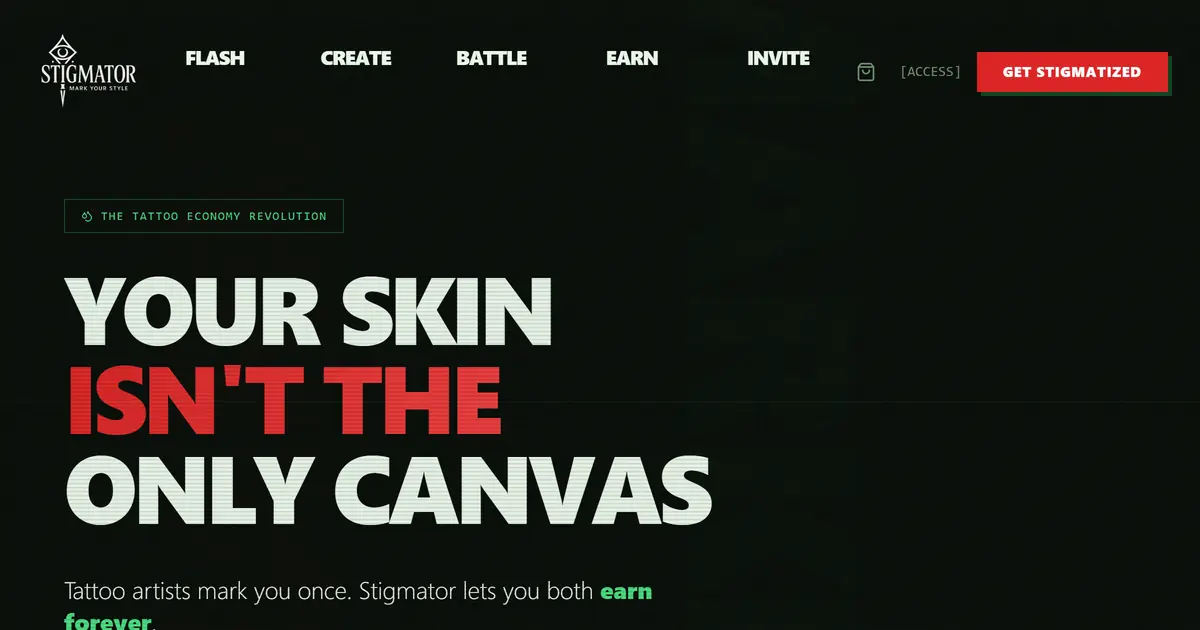
Stigmator is a marketplace where tattoo art becomes wearable. Artists upload flash, establish provenance and rights, and keep 70% of every sale. Fans buy the work on tees and hoodies; brands license verified designs. The Equity Ink Protocol goes further — people carrying the original tattoo activate a partnership code, set a 15–25% split, and earn wherever the art travels. A Battle Arena adds monthly challenges, brackets and global rankings.
Under the hood
The interface borrows from machines, not galleries: terminal boot sequences, bracketed system labels, monospace status readouts and a near-black canvas split by signal-red and phosphor-green. Underneath the theatre it's a Next.js app on Vercel with an artist onboarding pipeline (apply, upload, partnerships), authenticated dashboards, a competition engine with voting and brackets, and provenance records linking every artwork to artist, studio and original wearer.
Details that matter
Artists keep 70%. Artists upload their flash, establish rights and provenance, build a following and keep 70% on every Stigmator piece sold.
Equity Ink Protocol. The Equity Ink Protocol: people carrying the original tattoo activate their artist's partnership code, set a 15–25% revenue split and share in the artwork's commercial life.
Brand licensing arm. A brand licensing arm — verified artwork with documented provenance, with artist, original wearer and platform sharing every licence.
Battle Arena. The Battle Arena runs monthly design challenges, head-to-head bracket tournaments and global rankings.
Three-sided marketplace. Three-sided marketplace mechanics connecting artists, original tattoo wearers and brands, each with a distinct revenue share.
Boot-sequence UX. Boot-sequence UX throughout: 'LOADING INITIALIZING SYSTEM…', bracketed labels like [FOR EVERYONE] and [THE SYSTEM], and a 'SYSTEM OPERATIONAL' status footer.
Onboarding pipeline. An artist onboarding pipeline — apply, upload designs, manage partnerships — behind authenticated routes.
Provenance records. Provenance records link every artwork to its artist, studio and the original wearer.
Stack evidence: Next.js on Vercel; ?dpl= deployment params; SPA routes under /artist, /auth and /dashboard.
One client per industry, per area
Want this for your business?
Every build starts the same way: you describe it, we quote it fixed, and you see the finished design before you pay a cent.
Answered personally, same business day.